
Last Updated on January 7, 2026 by admin
Have you ever wondered why some casino games seem to pay out more frequently, while others feel cold for long stretches? Is it luck, timing, or something deeper happening behind the scenes? The answer lies in casino algorithms—the complex systems that control how online casino games behave. Understanding these algorithms doesn’t mean you can “beat the casino,” but it does help you make smarter choices, manage expectations, and choose games that fit your play style.
In this comprehensive guide by DuraGaming, we’ll explain how casino algorithms work, why some games hit more often, and how players can use this knowledge responsibly.
What Are Casino Algorithms?
A casino algorithm is a mathematical system that determines how outcomes are generated in online casino games. These algorithms ensure games are:
- Fair
- Random
- Predictable over the long term
- Profitable for the casino
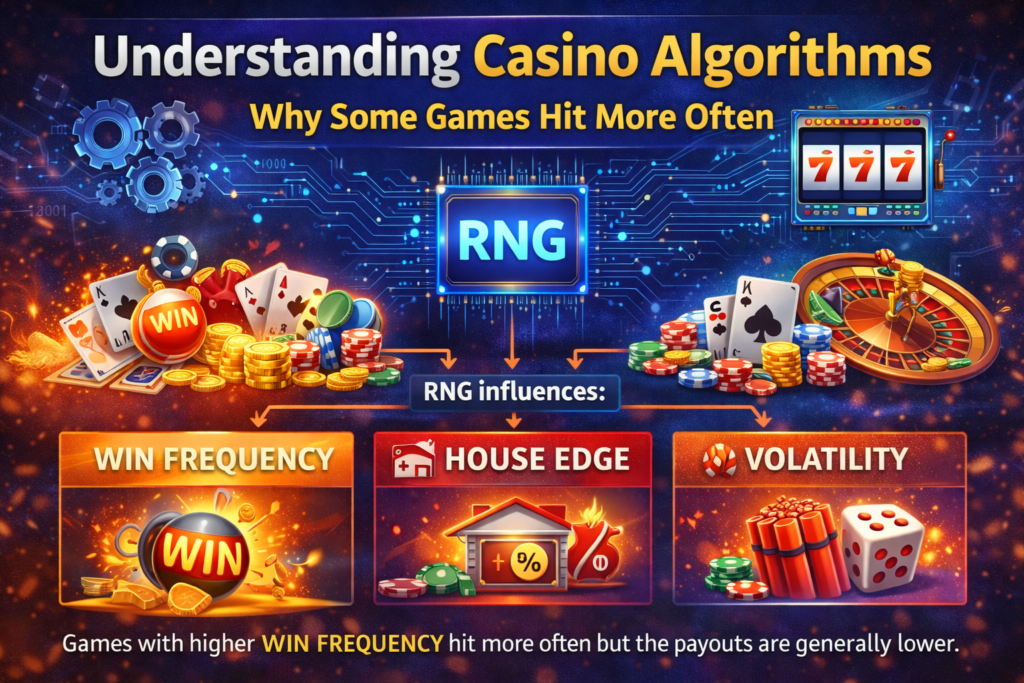
At the heart of most online casino games is something called a Random Number Generator (RNG).
Understanding RNG (Random Number Generator)
What Is an RNG?
An RNG is a software algorithm that generates thousands of random numbers every second. Each number corresponds to a possible game outcome—such as a slot reel position or a card drawn in blackjack.
Key points:
- RNGs run continuously (even when you’re not playing)
- Every spin or hand is independent
- Past outcomes do not influence future results
This is why casinos often say:
“Every bet is random and independent.”
Why Some Casino Games “Hit” More Often
When players say a game “hits more often,” they usually mean it provides frequent small wins, not necessarily large payouts.
This behavior is influenced by three major algorithmic factors:
- RTP (Return to Player)
- Volatility (Variance)
- Game design & payout structure
Let’s break each one down.
1. RTP (Return to Player) — The Foundation
What Is RTP?
RTP is the theoretical percentage of wagered money a game returns to players over time.
Example:
- RTP of 96% = For every ₹100 wagered, ₹96 is returned over millions of bets
Why RTP Matters
Games with higher RTP tend to:
- Return money more frequently
- Be better for long-term play
- Feel “friendlier” to players
However, RTP does not guarantee short-term wins.
2. Volatility — The Real Reason Games Hit More Often
What Is Volatility?
Volatility (also called variance) measures how often and how much a game pays out.
Low-Volatility Games
- Frequent small wins
- Lower jackpots
- Slower bankroll drain
- Feel like they “hit often”
High-Volatility Games
- Rare wins
- Big payouts when they hit
- Long losing streaks
- Feel “cold” most of the time
This is the biggest reason some games feel more active than others.
3. Game Design & Hit Frequency
What Is Hit Frequency?
Hit frequency refers to how often a game produces any winning outcome, even if it’s small.
Two games can have:
- Same RTP
- Same volatility
…but very different hit frequencies.
Design Elements That Affect Hit Frequency
- Number of paylines
- Bonus trigger frequency
- Mini wins (2x–5x payouts)
- Near-miss mechanics
Slot games are often designed to entertain, not just pay.
Do Casinos Control When Games Pay?
Short Answer: No (In Licensed Casinos)
Licensed online casinos cannot manually control outcomes. Once a game is certified, outcomes are governed by the RNG and algorithm.
What casinos can control:
- Which games they offer
- RTP versions selected (some games have multiple RTP settings)
- Bonus structures and wagering rules
Slot Algorithms vs Table Game Algorithms
Slot Games
- Fully RNG-based
- No skill involved
- RTP + volatility decide behavior
- Most variation between games
Table Games (Blackjack, Roulette, Baccarat)
- RNG used for shuffling/cards
- Player decisions matter (especially blackjack)
- Lower house edge in some cases
This is why blackjack feels more “consistent” than slots.
Live Casino Games: Are Algorithms Still Used?
Yes—but differently.
Live Dealer Games Use:
- Real cards or wheels
- Physical outcomes
- Digital systems for betting & payouts
Algorithms still handle:
- Bet validation
- Payout calculation
- Game integrity
This is why many players trust live games more.
Psychological Tricks vs Algorithms
Many players confuse psychological design with algorithm manipulation.
Examples of Psychological Design:
- Near-miss spins
- Celebration sounds for small wins
- Bonus teases
- Visual stimulation
These do not affect outcomes, but they influence perception.
Understanding this helps players avoid emotional decisions.
Can Players Use Algorithm Knowledge to Win?
You cannot beat RNG, but you can play smarter.
Smart Player Strategies
- Choose higher RTP games
- Match volatility to bankroll
- Avoid chasing losses
- Use bonuses carefully
- Play for entertainment, not income
Common Myths About Casino Algorithms
- “The game is due to pay”
- “Changing bet size triggers wins”
- “Playing longer improves odds”
- “Casinos adjust games for individual players”
Reality: Each outcome is independent.
Responsible Gaming & Algorithm Awareness
Understanding algorithms should encourage responsible play, not risky behavior.
Healthy mindset:
- Wins are temporary
- Losses are part of the game
- Entertainment comes first
Final Thoughts: Why Knowledge Matters
Casino algorithms aren’t your enemy—they’re the framework that ensures fairness and consistency. Games that “hit more often” do so because of low volatility and high hit frequency, not because they’re easier to beat.
By understanding:
- RTP
- Volatility
- RNG
- Game design
you become a smarter, calmer, and more responsible player.
At DuraGaming, our mission is to help players play informed, stay safe, and enjoy gaming responsibly.
