
Last Updated on August 10, 2026 by admin
Betting—whether on sports, casino games, or poker—is often misunderstood as a quick way to make money. Many beginners jump in hoping for instant wins, while experienced players approach betting with patience and planning. This difference in mindset usually comes down to betting strategy.
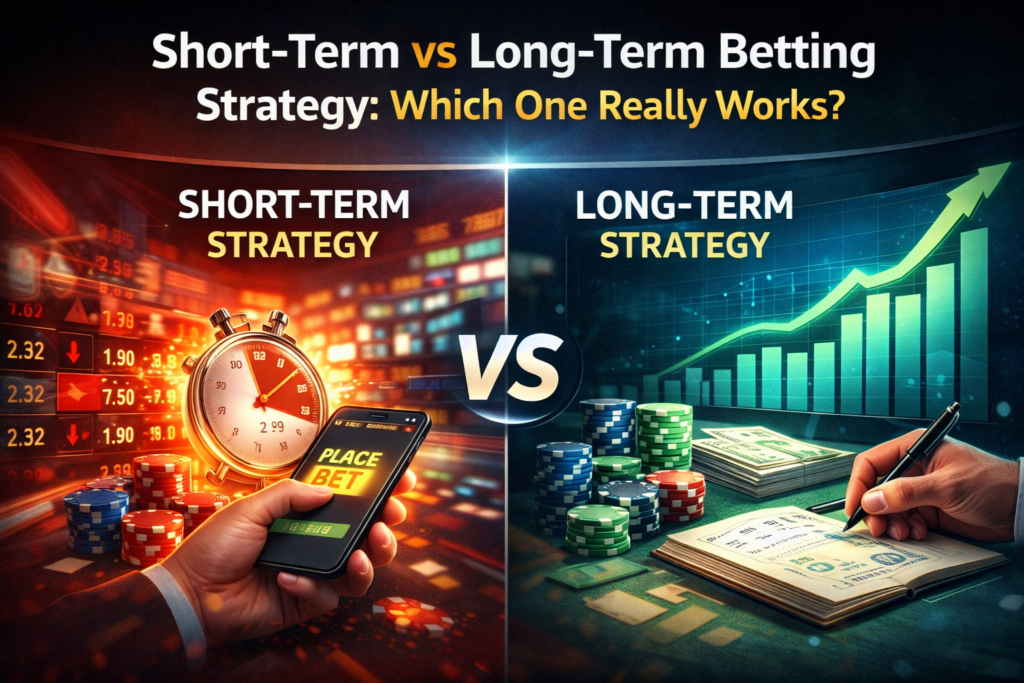
Two common approaches dominate the betting world: short-term betting strategy and long-term betting strategy. Both are widely used, but they work in very different ways and deliver very different results.
In this guide, we’ll clearly explain:
- What short-term betting strategy is
- What long-term betting strategy is
- The pros and cons of each
- Which strategy is better for beginners
- How to combine both wisely
- Answers to the most common questions beginners ask
By the end, you’ll understand which approach suits your goals, risk tolerance, and experience level.
What Is a Short-Term Betting Strategy?
A short-term betting strategy focuses on quick results. The goal is to place bets that can deliver immediate or fast returns—sometimes within minutes, hours, or a single match.
This strategy is popular among beginners because it feels exciting and rewarding when it works.
Common Examples of Short-Term Betting
- Live betting during matches — see our Live Cricket Betting Strategy guide for how real-time odds shift during play
- High-odds accumulator bets — explained in full in What Is an Accumulator in Betting?
- Session or over/under betting
- Quick casino games or spins
- Chasing losses after a bad bet
Short-term bettors usually judge success based on individual wins, not overall performance.
Advantages of Short-Term Betting Strategy
1. Fast Results
You don’t have to wait days or weeks to know the outcome. Results are instant, which feels satisfying.
2. High Excitement Level
Short-term betting keeps adrenaline high. Live betting and quick decisions make the experience more engaging.
3. Lower Time Commitment
You don’t need deep analysis or long-term tracking. Many bets are placed impulsively.
4. Appealing for Casual Bettors
If betting is just entertainment, short-term strategies feel easier and more fun.
Disadvantages of Short-Term Betting Strategy
1. Higher Risk
Quick decisions often mean poor analysis. This increases the chances of losses.
2. Emotional Decision-Making
Short-term betting is closely linked to tilt, frustration, and chasing losses.
3. Inconsistent Results
One win doesn’t mean the strategy works. Results fluctuate heavily.
4. Bankroll Drain
Without discipline, short-term betting can wipe out a bankroll quickly.
Most bettors who lose money do so because they rely only on short-term strategies without control.
What Is a Long-Term Betting Strategy?
A long-term betting strategy focuses on consistency and sustainability rather than instant profits. The goal is to make smart, value-based bets over time and judge success across weeks, months, or even years.
Professional and experienced bettors almost always rely on long-term strategies.
Common Examples of Long-Term Betting
- Value betting based on comparing your own probability estimate against the bookmaker’s odds — see How Betting Odds Are Calculated for the math behind this
- Flat stake betting
- Long-term bankroll management
- Statistical and data-based analysis, such as analyzing team form before betting
- Tracking performance over hundreds of bets
Here, success is measured by overall return on investment (ROI), not single wins.
Advantages of Long-Term Betting Strategy
1. Lower Risk Over Time
Losses are spread out, and variance evens out across many bets.
2. Better Decision-Making
Long-term bettors rely on logic, research, and probability—not emotions.
3. Sustainable Bankroll Growth
Proper bankroll management protects you from going broke.
4. Realistic Expectations
Long-term betting accepts losses as part of the game and focuses on gradual improvement.
This approach treats betting as a skill-based activity, not a gamble.
Disadvantages of Long-Term Betting Strategy
1. Slower Results
You won’t see instant profits, which can feel boring to impatient players.
2. Requires Discipline
Sticking to a plan during losing streaks is mentally challenging.
3. Time & Effort Needed
Research, tracking bets, and analysis take time.
4. Not Suitable for Everyone
Some players prefer entertainment over structured planning.
Key Differences: Short-Term vs Long-Term Betting Strategy
| Aspect | Short-Term Strategy | Long-Term Strategy |
|---|---|---|
| Focus | Quick wins | Consistent growth |
| Risk Level | High | Controlled |
| Decision Style | Emotional / Impulsive | Analytical / Planned |
| Bankroll Safety | Weak | Strong |
| Ideal For | Casual players | Serious bettors |
| Sustainability | Low | High |
| Typical Timeframe | Single bet to a few days | Weeks to months |
Why Most Beginners Choose Short-Term Strategy
New bettors are naturally attracted to short-term betting because:
- It looks easy
- Wins feel exciting
- Losses feel temporary
- Social media promotes “big wins”
However, this approach often leads to frustration and losses when expectations don’t match reality.
Why Experienced Bettors Prefer Long-Term Strategy
Experienced bettors understand that:
- Losing bets are unavoidable
- Variance exists
- Discipline beats excitement
- Strategy matters more than luck
Long-term betting isn’t about winning every bet—it’s about winning more than you lose over time.
Can You Combine Short-Term and Long-Term Strategies?
Yes—but carefully.
A smart approach is to:
- Use long-term strategy as your foundation
- Allocate a small portion of bankroll for short-term bets
- Never chase losses
- Treat short-term bets as entertainment, not income
This balance helps maintain discipline while still enjoying the excitement of betting.
Bankroll Management: The Deciding Factor
No strategy works without proper bankroll management.
Smart Bankroll Rules
- Never bet money you can’t afford to lose
- Use fixed stake sizes
- Avoid doubling bets after losses
- Set daily and weekly limits
Whether short-term or long-term, bankroll discipline decides survival.
Read Also: Effective Bankroll Management Techniques for Serious Gamblers
Emotional Control in Betting
Short-term strategies often fail due to emotions:
- Anger after losses
- Overconfidence after wins
- Fear of missing out
Long-term strategies reduce emotional involvement by focusing on process over outcome.
If emotions control decisions, no strategy will succeed.
Which Strategy Is Better for You?
Choose Short-Term Strategy If:
- You bet purely for entertainment
- You accept high risk
- You play occasionally
- You have strict loss limits
Choose Long-Term Strategy If:
- You want consistency
- You care about sustainability
- You’re willing to learn and track bets
- You want controlled risk
For most players, long-term strategy is the smarter choice.
Common Mistakes Bettors Make With Strategies
- Switching strategies after one loss
- Expecting guaranteed profits
- Ignoring data and odds
- Betting emotionally
- Not tracking results
A strategy only works if you follow it consistently.
Frequently Asked Questions
Which is better: short-term or long-term betting strategy?
For most bettors, long-term strategy is the more reliable approach because it manages risk through discipline and data rather than chasing single-event wins. Short-term betting can still be worthwhile as entertainment, provided it’s a small, clearly limited portion of your overall approach.
Can a beginner use a long-term betting strategy?
Yes. In fact, beginners benefit the most from starting with long-term principles — flat staking, tracking results, and setting strict limits — since it builds good habits before bad ones (like chasing losses) have a chance to form.
How much bankroll should I set aside for short-term bets?
There’s no universal number, but a common guideline experienced bettors use is to cap short-term or “for fun” bets at a small, fixed percentage of your total bankroll — often cited as no more than 5–10% — so a losing streak on impulsive bets can’t meaningfully damage your long-term strategy.
Is long-term betting guaranteed to be profitable?
No. Long-term betting reduces variance and improves decision quality, but no betting strategy guarantees profit. It shifts the odds of sustainable results in your favor over time — it does not eliminate risk.
What’s the biggest mistake people make when switching between strategies?
Abandoning a long-term strategy after a short losing streak. Variance is a normal part of long-term betting; switching strategies reactively after a few losses usually does more harm than sticking with a sound, data-based plan.
Do professional bettors ever use short-term strategies?
Rarely as their primary approach. Professionals occasionally take short-term opportunities when the value is clearly in their favor, but their overall bankroll and decision-making are governed by long-term, research-based principles.
Final Thoughts
There is no “perfect” betting strategy—but there is a smart approach.
Short-term betting offers excitement but comes with high risk. Long-term betting prioritizes discipline, analysis, and sustainability. Understanding the difference helps you make better decisions and avoid common pitfalls.
If your goal is enjoyment, short-term bets can be fun. If your goal is consistency and control, long-term strategy is the way forward.
Responsible Gaming Note
Betting should always be done responsibly and for entertainment. Set limits, take breaks, and never gamble more than you can afford to lose.